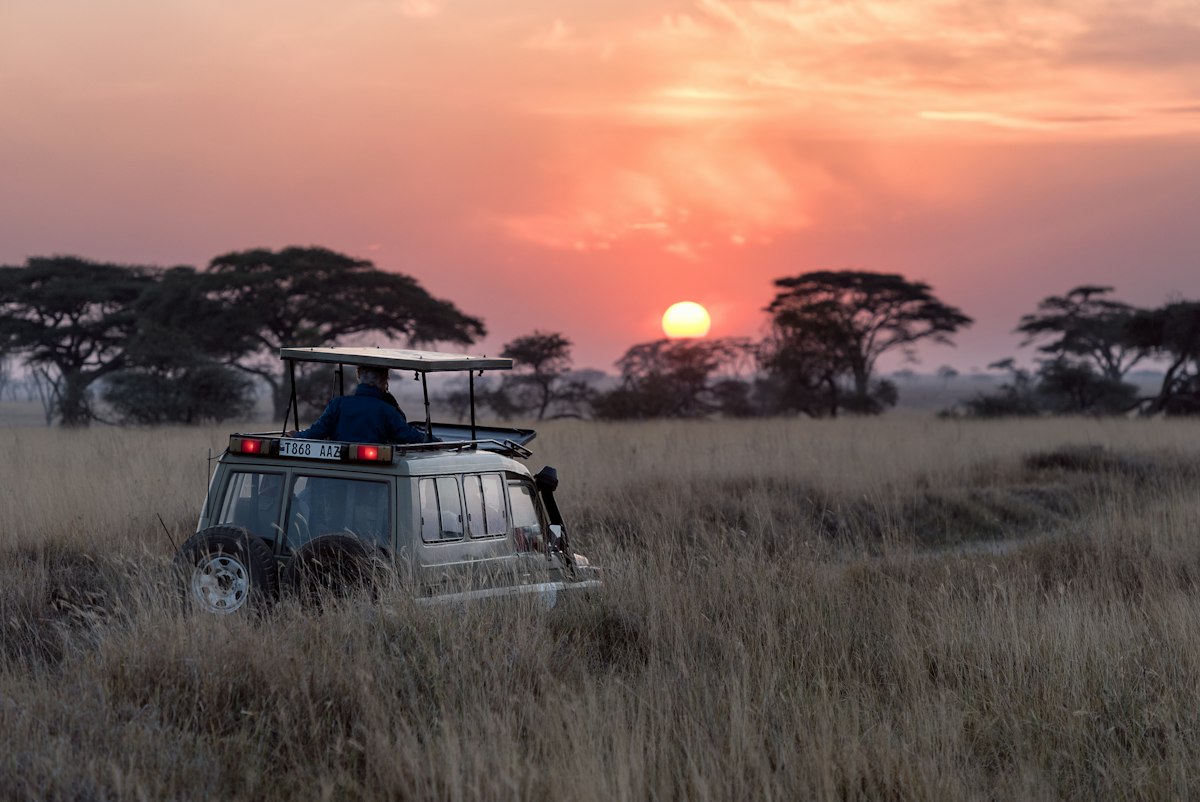
Ngorongoro Conservation Area
Descend into the Ngorongoro Crater in northern Tanzania. The world's largest intact volcanic caldera shelters a natural wildlife basin of over 25,000 large mammals, including endangered black rhinos, alongside ancestral Maasai pastoralists.
About Ngorongoro Conservation Area
Geological Origin and Caldera Topography
The Ngorongoro Conservation Area (NCA) spans 8,292 square kilometres in northern Tanzania's Arusha Region. Inscribed as a mixed UNESCO World Heritage site for both natural and cultural values, the conservation area's crowning landmark is the Ngorongoro Crater—the world's largest intact, unflooded volcanic caldera. Formed approximately two to three million years ago when an immense volcano rivaling Kilimanjaro in height collapsed inward, the crater basin covers 260 square kilometres, surrounded by sheer forested walls rising 610 metres above the floor.
Because the rim sits at an elevation of 2,286 metres while the floor lies at 1,700 metres, descending the crater wall traverses distinct microclimates, from cool, cloud-draped montane forest along the rim to open grassland savanna, acacia fever tree woodlands, and seasonal soda lakes on the basin floor.
Wildlife Density on the Crater Floor
The enclosed crater floor shelters a permanent resident population of approximately 25,000 large mammals, representing one of the highest concentrations of terrestrial wildlife in Africa:
- Black Rhinos: The open, short-grass plains surrounding Lake Magadi provide one of East Africa's most secure refuges for the critically endangered eastern black rhinoceros (Diceros bicornis michaeli), regularly observed with high-powered binoculars.
- Carnivores: The crater supports a high-density lion population characterized by large, muscular prides, alongside spotted hyenas, golden jackals, servals, and occasional leopards in the Lerai Forest.
- Herbivores: Thousands of blue wildebeest, plains zebras, African buffaloes, elands, Grant's gazelles, and Thomson's gazelles feed on mineral-rich volcanic pastures. Bull elephants with impressive tusks inhabit the Lerai acacia forest.
Olduvai Gorge: The Cradle of Humankind
West of the crater rim within the NCA lies Olduvai Gorge (correctly Oldupai, named after the wild sisal plant), a steep-sided 50-kilometre-long ravine that has yielded monumental paleoanthropological discoveries. Excavated over decades by Louis and Mary Leakey, the gorge revealed hominid fossils including Paranthropus boisei (dating to 1.75 million years) and Homo habilis, establishing East Africa's central role in early human evolution. An onsite museum overlooks the excavation beds.
Maasai Pastoralism and Multi-Use Management
Unlike national parks, the Ngorongoro Conservation Area was established under a pioneering multi-use charter allowing indigenous Maasai pastoralists to graze livestock across regional grasslands. Visitors frequently see traditional red-shrouded Maasai warriors and herders guiding cattle to seasonal mineral waterholes on the crater slopes.
Visiting Logistics and Regulations
Crater floor game drives are strictly regulated by the Ngorongoro Conservation Area Authority (NCAA). Access is restricted to certified 4x4 safari vehicles via designated steep descent and ascent roads, with daily permits limited to a maximum six-hour duration per vehicle to minimize ecological compaction.
The crater can be visited year-round. Dry winter months from June to October offer firm tracks and clear skies. The wet season from November to May produces lush emerald pastures and flocks of flamingos on Lake Magadi.
Frequently Asked Questions
Can all the Big Five be observed in the Ngorongoro Crater?
Lions, buffaloes, elephants, and black rhinos are resident on the crater floor. Leopards live in the Lerai Forest and on the forested crater rim, though their nocturnal and arboreal habits make daytime sightings less predictable.
Why are giraffe not found inside the Ngorongoro Crater?
Giraffes are absent from the crater floor because the steep descent walls present a physical hazard to their legs and center of gravity, and because their preferred food source—tall acacia tree canopies—is scarce on the open short-grass floor.
Are accommodation lodges located on the crater floor?
No accommodations are permitted on the crater floor. All safari lodges and tented camps are situated along the crater rim or in the nearby gateway town of Karatu.
🦍 Wildlife & Nature
🎯 Top Experiences
🧳 Travel Tips & Practical Advice
Tanzania Beyond the Migration: Tarangire, Ngorongoro and Serengeti
Tanzania’s northern circuit is more than a migration forecast. Explore Tarangire’s river landscapes, Ngorongoro’s living conservation area and the many habitats of Serengeti.
🗺️ Ngorongoro Conservation Area Experiences
No tours are currently listed. Request a custom journey with a verified local operator.
✨ Request a Custom Journey with a Local Operator →📍 Nearby Destinations in Tanzania
ℹ️ Practical Info
Explore Ngorongoro Conservation Area
Custom journeys crafted directly by verified in-country specialists.
Request Custom Journey →