Serengeti National Park
Traverse the vast savanna plains of Serengeti National Park in northern Tanzania. Inscribed as a UNESCO World Heritage site, this protected ecosystem is famous for the year-round Great Migration, high lion pride densities, and granite kopjes.
About Serengeti National Park
Ecosystem Overview and Endless Plains
Derived from the Maasai word Siringet, meaning 'the place where the land runs on forever,' Serengeti National Park encompasses nearly 15,000 square kilometres of protected savanna in northern Tanzania. Inscribed as a UNESCO World Heritage site in 1981, the park forms the core of the greater Serengeti-Mara ecosystem, preserving one of the most intact and ancient terrestrial wildlife migrations remaining on Earth.
The landscape encompasses diverse ecological zones, transitioning from open volcanic short-grass plains in the south to acacia thorn savannas in the central Seronera valley, riverine gallery forests along the Grumeti and Mara rivers, and wooded hills in the north. Elevations range from 920 to 1,850 metres, creating temperate highland weather patterns.
The Circular Rhythm of the Great Migration
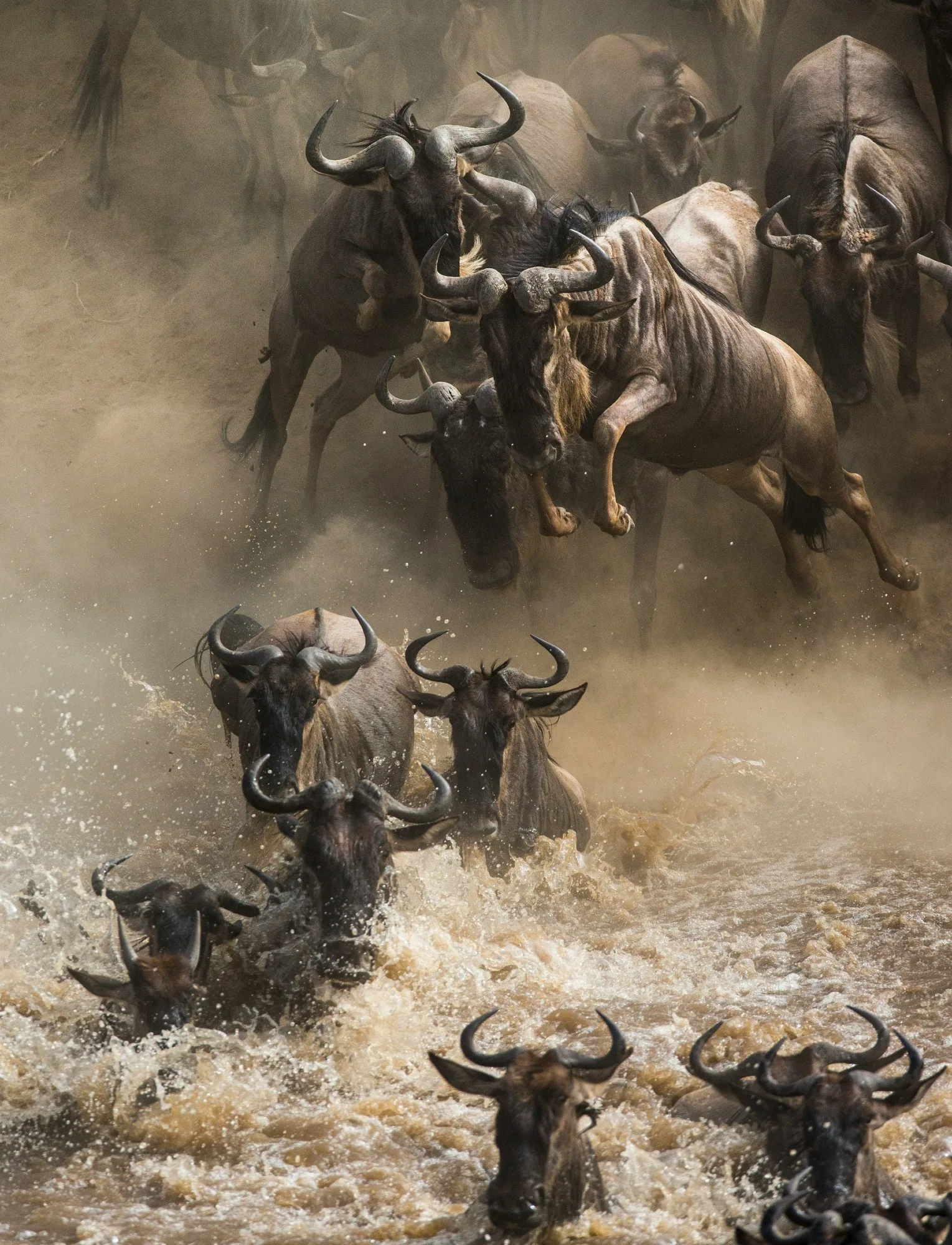
The defining ecological phenomenon of the Serengeti is the continuous, circular 800-kilometre journey of over 1.5 million blue wildebeest, accompanied by approximately 250,000 plains zebras and Thomson's gazelles. Driven by rainfall and seasonal grass nutrient cycles, the migration follows predictable geographic stages throughout the year:
- Calving Season on the Southern Plains (January to March): Around Ndutu and the southern short-grass plains, half a million wildebeest calves are born within a brief two-to-three-week window, drawing apex predators across open expanses.
- The Western Corridor and Grumeti River (May to July): As southern plains dry, herds move northwest into the Western Corridor, crossing the Grumeti River where large Nile crocodiles wait in seasonal pools.
- Northern Serengeti and Mara River (July to October): Herds concentrate in the northern Kogatende sector, navigating dramatic plunge crossings of the Mara River into and out of Kenya's Masai Mara.
- Central Transition (November and December): Following short rains, herds move south through the central Seronera valley toward their ancestral calving grounds.
Predator Stronghold and Granite Kopjes
The Serengeti is recognized for hosting Africa’s largest lion population, estimated at over 3,000 individuals across numerous resident prides. Central to lion and leopard ecology are the kopjes—weathered pre-Cambrian granite inselbergs such as Moru, Simba, and Gol Kopjes that rise from the flat grass sea.
These ancient rock outcrops provide elevated lookout points for hunting predators, shade during midday heat, natural rock hollows that trap rainwater, and secure dens for newborn cubs. Moru Kopjes also harbors a monitored breeding territory for endangered black rhinos.
Safari Experiences and Hot Air Ballooning
Game drives in open 4x4 safari vehicles provide the primary means of exploring the park's immense track network. Dawn hot air balloon safaris over the Seronera or northern Mara rivers offer an extraordinary bird's-eye perspective on migrating herds, ending with breakfast served in the open bush.
Seasons, Access and Travel Logistics
The Serengeti can be visited year-round, with wildlife viewing shifting geographically according to migration stages. The dry season from June to October offers easy travel along main tracks and excellent visibility. The green season (November to May) brings vibrant wildflowers, migratory Eurasian birds, and the calving spectacle in the south.
The park is served by multiple bush airstrips (Seronera, Kogatende, Ndutu, Grumeti) with daily scheduled light aircraft flights from Arusha Airport (ARK) and Kilimanjaro International Airport (JRO). Overland transit from Arusha takes approximately seven to eight hours via Lake Manyara and the Ngorongoro Conservation Area.
Frequently Asked Questions
Can the Great Migration be seen in the Serengeti at any time of year?
Yes. The Great Migration remains inside the Serengeti ecosystem for roughly nine to ten months of each year, moving between the southern plains (Jan–Mar), western corridor (May–Jun), northern sectors (Jul–Oct), and central plains (Nov–Dec).
How many days are recommended for a Serengeti safari?
A minimum of three to four nights is strongly recommended to allow sufficient time to explore different ecological sectors and minimize long driving transit times.
Are off-road driving and night drives permitted inside the national park?
Off-road driving is strictly prohibited in Tanzania national parks to protect grasslands, and night game drives are limited to designated private buffer concessions outside the park boundary.
🦍 Wildlife & Nature
🎯 Top Experiences
🧳 Travel Tips & Practical Advice
Tanzania Beyond the Migration: Tarangire, Ngorongoro and Serengeti
Tanzania’s northern circuit is more than a migration forecast. Explore Tarangire’s river landscapes, Ngorongoro’s living conservation area and the many habitats of Serengeti.
🗺️ Serengeti National Park Experiences
No tours are currently listed. Request a custom journey with a verified local operator.
✨ Request a Custom Journey with a Local Operator →📷 Serengeti National Park Photo Gallery
Click any photo to enlarge (3)📍 Nearby Destinations in Tanzania
ℹ️ Practical Info
Explore Serengeti National Park
Custom journeys crafted directly by verified in-country specialists.
Request Custom Journey →