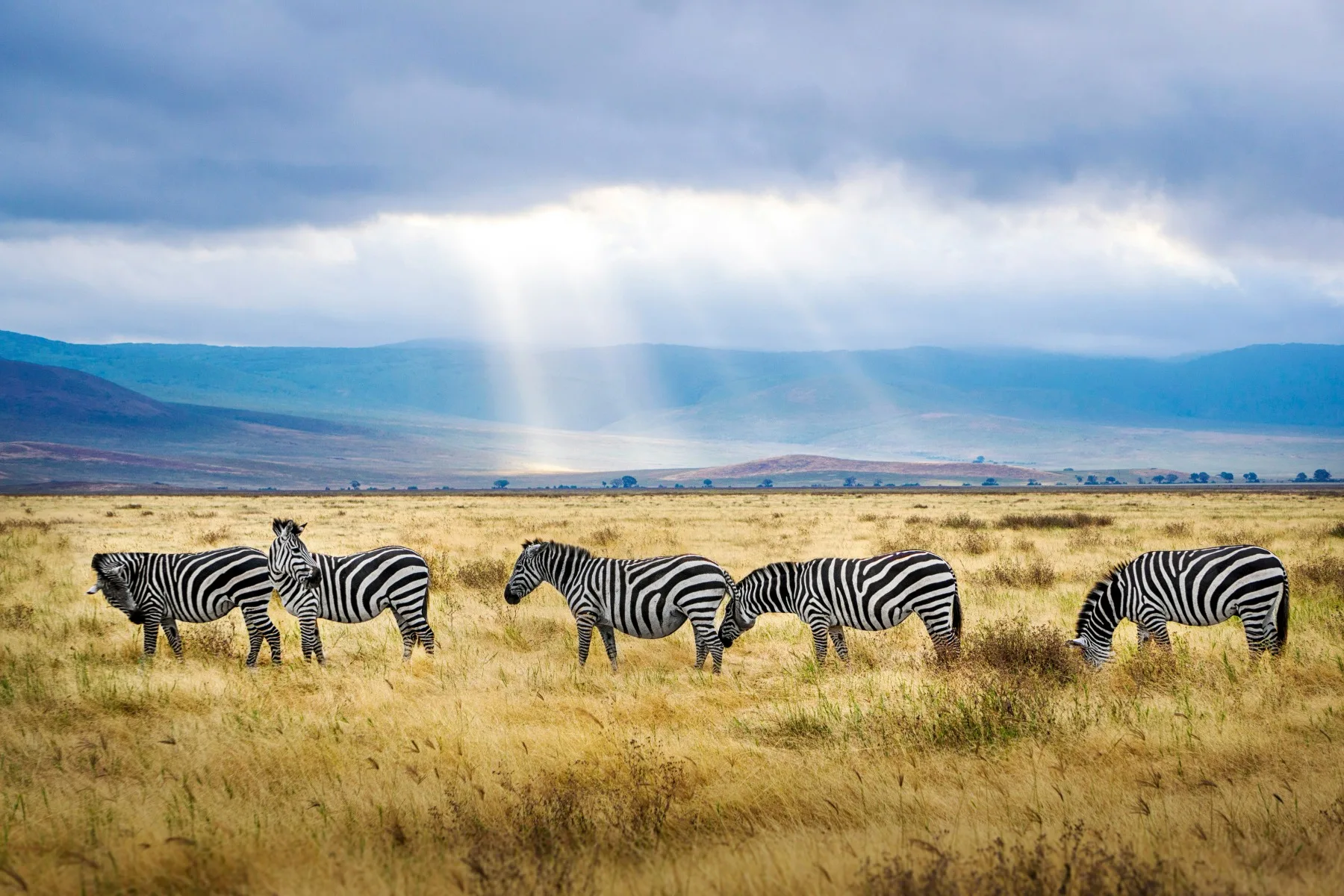
The Great Migration is one of the world’s most recognizable wildlife stories. It is also frequently simplified into a fixed calendar and a guaranteed spectacle. In reality, animal movement responds to rain, grazing, water and conditions across a large ecosystem. No responsible operator can promise a precise river crossing or place every herd in one location months in advance.
Northern Tanzania remains extraordinary without such promises. Tarangire’s river and baobab landscapes, the highlands and mixed land use of the Ngorongoro Conservation Area, and Serengeti’s immense savannas create a journey with depth in every season.
The strongest itinerary treats these places as connected ecosystems rather than stages in a race toward one photograph.
Arusha: prepare before entering the circuit
Arusha is the practical center of many northern-circuit journeys. Use the first day to recover from travel and examine the itinerary in detail.
Confirm vehicle configuration, luggage limits, park reservations, accommodation locations, drinking-water arrangements and emergency communication. Ask how long each transfer realistically takes and whether game viewing has been added to a day already dominated by driving.
Arusha and its surroundings also have contemporary cultural and economic life that should not be ignored. A locally guided visit can provide context, but choose activities that are accurately described and respectful of residents.
Tarangire: follow the river, not only the checklist
The Tarangire River is central to the park’s ecology, particularly when surrounding areas become drier. The landscape includes riverine habitat, seasonal wetlands, woodland and baobabs.
Tarangire is often reduced to a short stop on the way to Ngorongoro. Staying longer makes it possible to observe how wildlife uses different habitats and how conditions change through the day.
Elephants are closely associated with Tarangire, but they should be given space. Drivers must avoid blocking movement or joining clusters of vehicles around an animal. A quiet sighting at a respectful distance is more valuable than a close encounter manufactured for a camera.
Lake Manyara and the Rift Valley: consider the route, not the label
The Lake Manyara area can provide a useful transition between Tarangire and the highlands. Water levels, wildlife distribution, road access and visitor experiences change over time, so the operator should explain what is currently realistic rather than relying on an old brochure description.
The wider escarpment and nearby towns also show how tourism, agriculture and daily life coexist around the protected areas. Travelers should avoid photographing people without permission or treating roadside communities as attractions.
Ngorongoro: a conservation area with people, wildlife and history
Ngorongoro is not simply a crater. The conservation area includes volcanic highlands, plains, archaeological sites and communities living within a multiple-use landscape.
The crater is visually dramatic and supports concentrated wildlife viewing, but vehicle numbers and restricted roads require disciplined guiding. Stay on authorized routes, keep noise low and avoid joining an excessive cluster around an animal.
Oldupai Gorge and related archaeological landscapes add another dimension. Visit with authorized guides and never remove stones, fossils or archaeological material.
Descriptions of Maasai culture must recognize contemporary people and present-day rights, not freeze communities in a romanticized past. Cultural visits should be consensual, transparent about fees and led by the community involved.
Serengeti: many habitats, not one migration point
Serengeti National Park covers a vast savanna ecosystem with regional differences in vegetation, water and wildlife movement. Central areas, western corridors, northern landscapes and southern plains do not offer identical experiences.
Where to stay should be determined by season, current conditions, travel time and the broader purpose of the trip—not by a promise that a herd will appear outside a particular camp.
Game drives are strongest when guides interpret ecology and behavior rather than racing between radio calls. Kopjes, riverine areas, grasslands and woodland each reward attention. Predators, grazers and birdlife should be viewed as parts of a living system rather than trophies on a list.
UNESCO recognizes Serengeti National Park for its large-scale ecological processes and wildlife movement. Protecting that value requires respect for roads, speed limits, waste rules and animal space.
Understanding migration without false guarantees
The migration is continuous movement across the wider Serengeti–Mara ecosystem. Rainfall can change timing and distribution. River crossings are especially unpredictable and may occur briefly, repeatedly or outside a visitor’s stay.
Ask an operator three questions:
Which region is proposed for these exact dates, and why?
How much extra driving is required to reach likely wildlife concentrations?
What will make the trip rewarding if the expected migration event does not occur?
An honest answer should include uncertainty. The safari should remain meaningful through landscape, resident wildlife, guiding and time in nature.
Optional extensions: Kilimanjaro, Lake Eyasi or Zanzibar
Extensions should add depth, not simply increase the destination count.
A Kilimanjaro climb is a separate expedition requiring acclimatization, equipment, trained mountain staff and an appropriate safety plan. It should never be attached casually to a safari itinerary.
Lake Eyasi cultural experiences require careful operator selection, consent and accurate representation. Avoid staged encounters that present communities as timeless spectacles.
Zanzibar can provide meaningful history and coastal culture as well as rest. Stone Town, village life and marine environments deserve informed local guidance. Domestic flight schedules and luggage restrictions must be checked before connecting from the safari circuit.
A balanced 10-day northern Tanzania route
This route is a planning framework, not a fixed package. Park operations, accommodation, road conditions and wildlife distribution must be confirmed with a licensed Tanzanian operator.
- Day 1 — Arusha:
Arrive, rest and complete a detailed vehicle, route and safety briefing.
- Day 2 — Arusha to Tarangire:
Enter the northern circuit gradually and begin wildlife viewing only if time allows.
- Day 3 — Tarangire National Park:
Follow changing habitats around the river and observe wildlife without crowding.
- Day 4 — Tarangire to the Ngorongoro highlands:
Travel through the Rift Valley region and arrive with time to rest.
- Day 5 — Ngorongoro Conservation Area:
Explore the crater under current access rules and with respect for its shared landscape.
- Day 6 — Ngorongoro to Serengeti:
Cross changing plains with realistic transfer expectations and authorized stops.
- Day 7 — Serengeti National Park:
Spend a full day interpreting habitats, resident wildlife and seasonal movement.
- Day 8 — Serengeti National Park:
Use a second day to reduce pressure to chase distant sightings.
- Day 9 — Serengeti:
Explore the region best suited to current conditions rather than following a fixed migration promise.
- Day 10 — Serengeti to Arusha or onward connection:
Use a planned flight or properly timed road transfer with adequate connection buffer.
Adding two nights improves the journey significantly. Use them in Tarangire or Serengeti, or add a carefully planned cultural or highland experience rather than another rushed park.
When to consider traveling
Northern Tanzania changes throughout the year. Rain transforms the plains, affects road conditions and influences wildlife distribution. Drier periods can concentrate animals around dependable water, while greener seasons can bring dramatic skies, young animals and dispersed herds.
Avoid choosing dates from a single migration graphic. Ask for current, region-specific guidance and understand the cancellation terms before booking seasonal camps or internal flights.
Responsible safari choices
Use licensed guides and appropriately equipped vehicles.
Stay on authorized roads and observe park speed limits.
Never pressure a guide to chase, block or crowd wildlife.
Keep voices low and allow animals a clear path.
Treat migration locations and river crossings as possibilities, not guarantees.
Ask how staff, guides and community partners are employed and paid.
Obtain consent before photographing people.
Do not remove rocks, plants, fossils or archaeological material.
Carry waste out and reduce single-use plastic where practical.
Follow all current TANAPA and Ngorongoro Conservation Area rules.
Frequently asked questions
Is the Great Migration visible all year?
The broader movement continues through the year, but herd locations and dramatic events vary with rainfall and conditions. A specific crossing or concentration cannot be guaranteed.
How many nights should I spend in Serengeti?
At least three nights is a sensible starting point for many routes. The best region and duration depend on season, accommodation location, transport and interests.
Is Ngorongoro only a wildlife destination?
No. It is a multiple-use conservation landscape with communities, archaeological heritage, volcanic highlands and wildlife. Its human context must be represented respectfully.
Can I add Zanzibar after safari?
Yes, provided flight schedules, baggage limits and enough time are built into the plan. Zanzibar should be approached as a cultural and historical destination as well as a beach extension.
Can I drive the northern circuit independently?
Independent travel requires careful understanding of permits, vehicle requirements, road conditions, navigation and emergency support. Many travelers benefit from a licensed local operator and experienced driver-guide.
Travel for the ecosystem, not the prediction
Tanzania’s northern circuit does not need a guaranteed river crossing to be extraordinary. Its power comes from scale: river systems, volcanic highlands, grasslands, woodland, resident wildlife and continuous ecological change.
Choose an operator who is honest about uncertainty, allow each place enough time and value the quality of guiding over the number of sightings. The result will be a richer safari and a more truthful encounter with northern Tanzania.
Plan Your Journey with Verified Local Operators
Ethical itineraries · Registered local guides · Direct booking
TravelAfricas Editorial Team
Our editorial team collaborates with licensed local guides, conservationists, and regional travel specialists to produce accurate, responsible African travel dispatches.