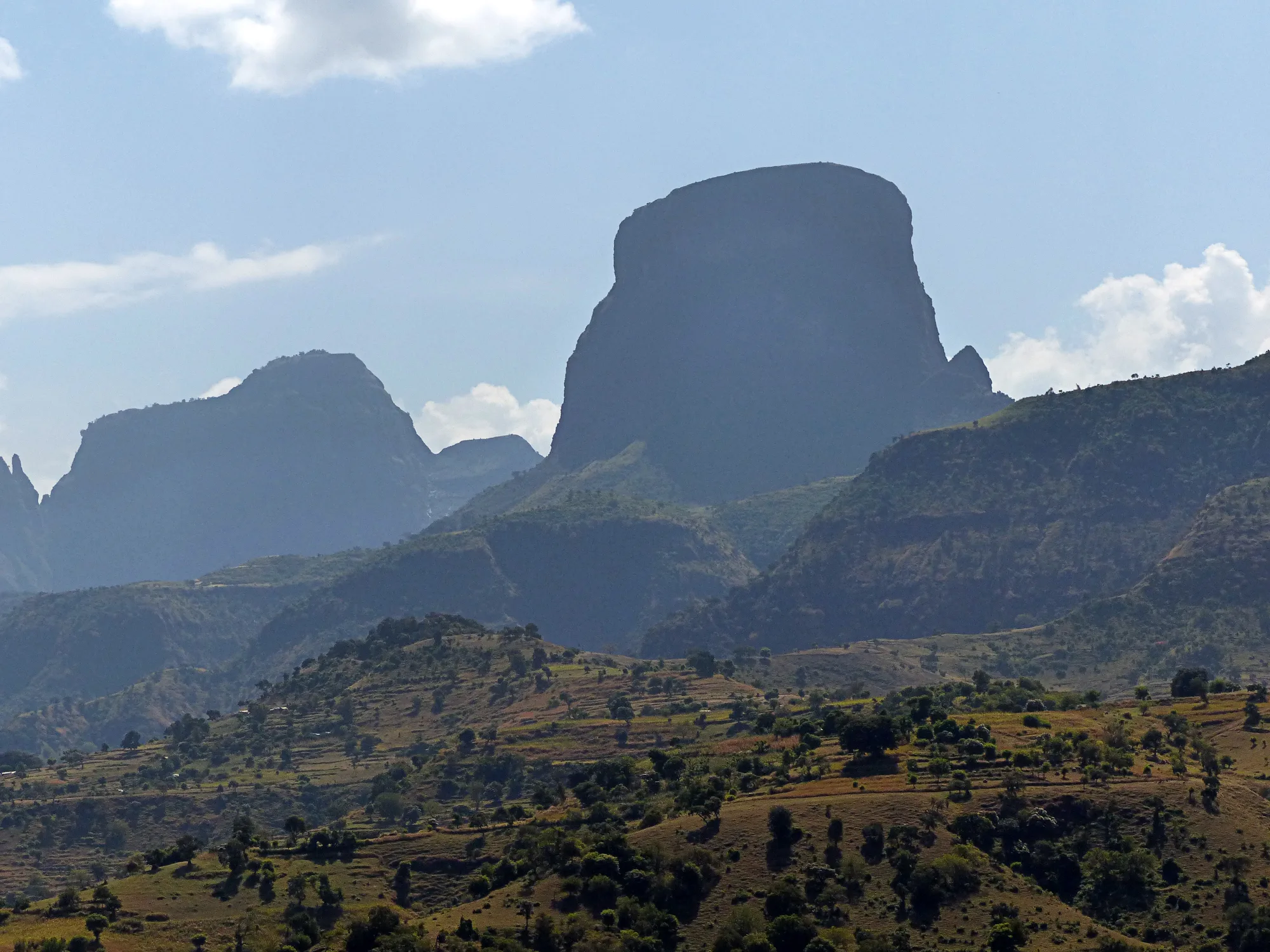
Simien Mountains National Park
Trek through the dramatic afro-alpine highlands of Simien Mountains National Park, a UNESCO World Heritage landscape of volcanic escarpments, deep gorges, and endemic wildlife including geladas, Walia ibex, and the Ethiopian wolf.
About Simien Mountains National Park
Geological Landscape and Ecological Value
Simien Mountains National Park encompasses more than 41,000 hectares in the North Gondar Zone of Amhara Region, northern Ethiopia. Inscribed as a UNESCO World Heritage site in 1978, the park encompasses dramatic escarpments formed by millions of years of volcanic activity and subsequent glacial erosion. Sheer basalt precipices plunge more than 1,000 metres into lowland valleys, creating one of the most rugged afro-alpine landscapes on the African continent.
The park encompasses diverse bio-climatic zones, transitioning from Afromontane forest at lower elevations (2,000–3,000m) dominated by giant heather and Hagenia abyssinica, to afro-alpine moorlands (above 3,600m) carpeted with endemic giant lobelias (Lobelia rhynchopetalum) and tussock grasses. The park includes Ras Dejen, which at 4,550 metres is the highest summit in Ethiopia.
The profound topographical variations create distinct microclimates across narrow geographic distances. Deep canyon riverbeds support lush riparian woodlands, while exposed escarpment ridges experience high wind speeds, intense solar radiation, and rapid temperature fluctuations between day and night.
Endemic Wildlife Encounters
The Simien range is a critical refuge for high-altitude wildlife adapted to cold afro-alpine conditions. While wildlife moves freely across precipitous terrain and sightings depend on season and altitude, the park protects three flagship endemic mammal species:
- Gelada (Theropithecus gelada): The world's only remaining graminivorous (grass-eating) monkey, often called the bleeding-heart baboon for the bare crimson patch on adult chests. Highly social, geladas forage in large bands across alpine meadows by day and sleep on sheer cliff ledges by night for predator safety.
- Walia Ibex (Capra walie): An endangered wild goat species found nowhere else on Earth, uniquely adapted to narrow cliff ledges and steep scree slopes in the upper Simien escarpment around Chennek.
- Ethiopian Wolf (Canis simensis): Africa's most endangered carnivore, occasionally observed hunting diurnal giant root-rats and grass rats on the alpine plateaus near Bwahit and Ras Dejen.
In addition to mammals, the Simiens host over 180 recorded avian species. Enormous raptors ride thermal updrafts along the escarpments, notably the lammergeier (bearded vulture), augur buzzard, Verreaux's eagle, and thick-billed raven, creating extraordinary opportunities for wilderness birding.
Trekking Routes and Wilderness Camps
Trekking in the Simiens ranges from gentle half-day cliff walks to multi-day high-altitude expeditions traversing Sankaber (3,250m), Gich (3,600m), and Chennek (3,620m) wilderness camps. Highlights along popular trails include the rim overlooking Jinbar Waterfall, which drops 500 metres into an abyss, and the panoramic summit of Mount Bwahit (4,430m).
All visitors entering the national park must register at the park headquarters in Debark, arrange park scout escorts, and travel with certified local guides and mule teams for luggage transfer. Campsites provide basic pitches with shared dry pit latrines; hikers must carry warm sleeping bags, waterproof layers, and mountain expedition equipment.
Trails wind through terraced farming settlements where local Amhara pastoralists graze sheep and cultivate barley, offering authentic glimpses into traditional highland agricultural life that has adapted to harsh mountain conditions over generations.
Climate, Seasons and Mountain Weather
Simien weather varies sharply by altitude and time of day. The dry season spans October through March, offering crisp sunshine, clear mountain vistas, and minimal rainfall. Day temperatures typically reach 15°C to 20°C, while night temperatures routinely drop below freezing (0°C to -5°C) at alpine campsites, with heavy morning frosts.
The rainy season from late June through September brings persistent rain, dense highland fog, and slippery trails, though alpine flora flowers vibrantly immediately following the rains in September and October. April and May can bring afternoon thunderstorms. Trekking requires layered clothing designed for sub-zero alpine conditions.
Health, Altitude and Trekking Safety
Trekking between 3,000 and 4,400 metres entails real risks of acute mountain sickness (AMS). Acclimatization is vital: spending at least one night in Gondar (2,100m) or Debark (2,850m) prior to strenuous trekking is strongly advised. Ascents should be gradual, water intake high, and any trekker showing symptoms of severe altitude sickness must descend immediately under scout guidance.
Park regulations require all trekking groups to be accompanied by an armed national park scout from the Ethiopian Wildlife Conservation Authority (EWCA). Scouts provide essential trail security, wildlife awareness, and route guidance along escarpment edges.
Frequently Asked Questions
What level of physical fitness is required for trekking in the Simiens?
Day walks near Sankaber are accessible to moderately active walkers. Multi-day treks traversing Gich, Chennek, and Bwahit involve steep inclines, loose gravel, and prolonged hiking at high elevation, requiring good cardiovascular fitness and prior mountain walking experience.
Can Simien Mountains National Park be visited on a day trip?
Yes. Day excursions from Gondar to Sankaber or the Jinbar Waterfall viewpoint allow visitors to experience escarpment views and gelada troops without overnight camping, though an early morning departure is required.
Can specific wildlife sightings be promised during a trek?
Gelada monkeys are habituated to quiet human presence and are very regularly observed foraging on plateau grasslands. Walia ibex and Ethiopian wolves roam wild across rugged escarpments, making sightings dependent on animal movements, weather, and altitude.
🦍 Wildlife & Nature
🎯 Top Experiences
🧳 Travel Tips & Practical Advice
Ethiopia: From Ancient Highlands to the Omo Valley
Discover Ethiopia through a carefully paced, modular journey linking Addis Ababa, the Historic North, Harar, Bale Mountains, Sof Omar, the Rift Valley, Chebera Churchura, South Omo and Borana. This guide explains what makes each region distinct—and why current access must always shape the final itinerary.
🗺️ Simien Mountains National Park Experiences
No tours are currently listed. Request a custom journey with a verified local operator.
✨ Request a Custom Journey with a Local Operator →📷 Simien Mountains National Park Photo Gallery
Click any photo to enlarge (4)📍 Nearby Destinations in Ethiopia
ℹ️ Practical Info
Explore Simien Mountains National Park
Custom journeys crafted directly by verified in-country specialists.
Request Custom Journey →