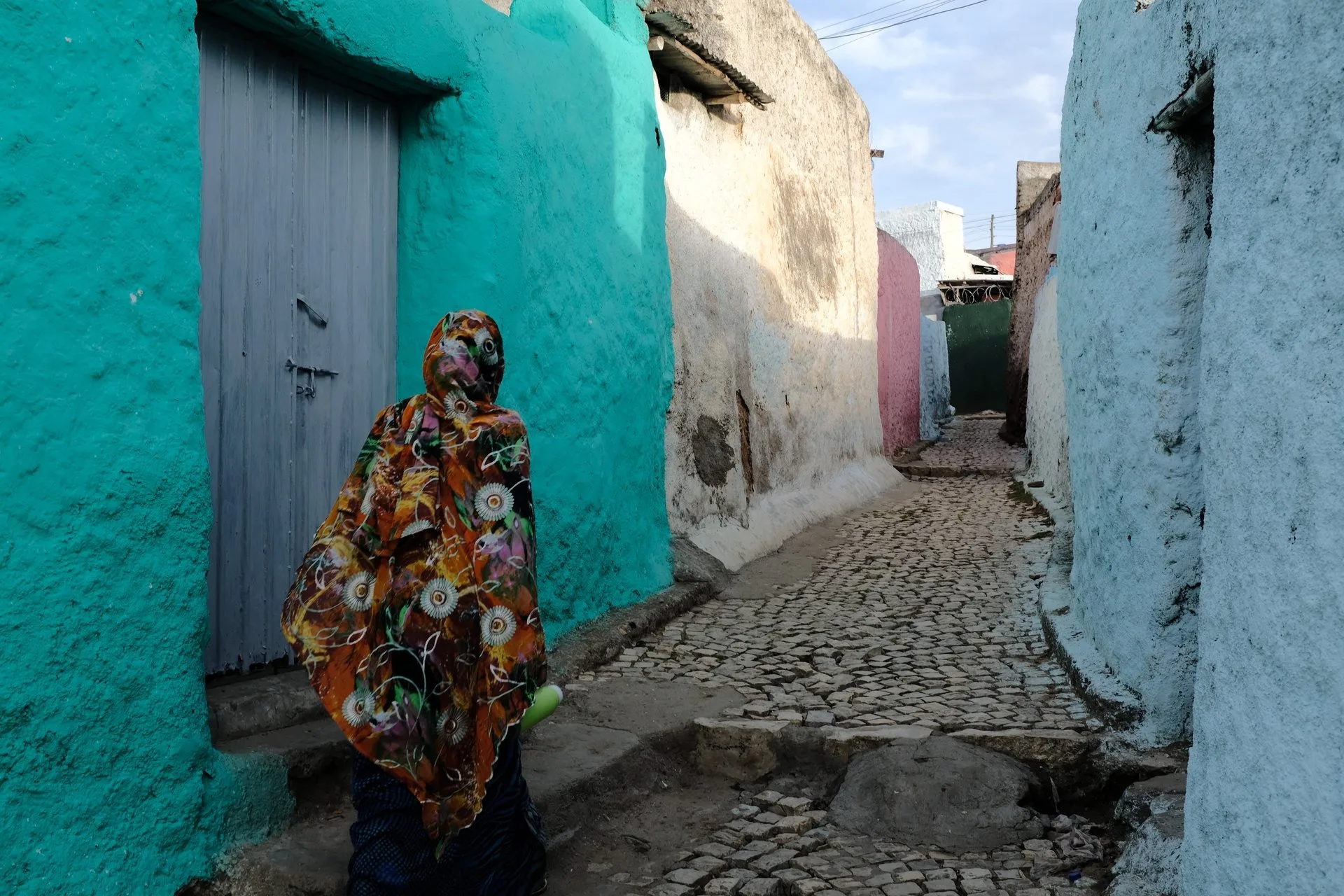
Harar Jugol
Step into Harar Jugol in eastern Ethiopia, an ancient walled Islamic city recognized by UNESCO. Wander through 368 narrow alleys lined with historic mosques, colorful townhouses, lively spice markets, and centuries-old living traditions.
About Harar Jugol
Historical Context and Islamic Heritage
Perched on a hilltop plateau in eastern Ethiopia at an elevation of 1,885 metres, Harar Jugol is a timeless fortified historic city inscribed as a UNESCO World Heritage site in 2006. Founded between the seventh and eleventh centuries, Harar served as the capital of the historic Sultanate of Harar and developed into one of the most prominent centers of Islamic scholarship, trade, and theology in the Horn of Africa, traditionally revered as the fourth-holiest city in the Islamic world.
Strategically positioned on commercial routes linking the central Ethiopian highlands with ports on the Red Sea and Gulf of Aden, Harar developed an independent urban culture, its own language (Harari), and its own currency before incorporation into the Ethiopian Empire in 1887 under Emperor Menelik II.
The city's urban layout reflects classical Islamic urban planning principles, where public squares and markets transition into intimate residential corridors designed to preserve household privacy, community cohesion, and defensive security.
The Jugol Fortified Wall and Historic Townhouses
The historic core is entirely enclosed by the Jugol, a four-metre-high defensive stone and limestone rampart constructed between the thirteenth and sixteenth centuries, punctuated by five historic entry gates corresponding to the main regional compass directions. Within this protected 48-hectare perimeter lies a labyrinth of 368 cobblestone alleys containing:
- 82 Historic Mosques: Representing one of the highest concentrations of mosques per square kilometre in the world, including three mosques tracing foundations back to the tenth century.
- 102 Shrines (Awach): Honoring revered Sufi saints, scholars, and spiritual leaders whose memory remains woven into neighborhood daily life.
- Traditional Harari Townhouses (Gegar): Distinctive two-storey residences with an inner reception hall (gidir gar) featuring five elevated platforms (nedaba) arranged hierarchically for family members and guests, and niches (taqet) displaying fine pottery, porcelain bowls, and woven baskets.
Living Traditions and the Hyena Men of Harar
Just outside the historic stone gates, visitors can witness one of the world's most unusual examples of human-wildlife coexistence: the nightly hyena feeding tradition. For generations, local 'hyena men' have summoned wild spotted hyenas by name from surrounding scrublands, feeding them strips of scrap meat from hands and wooden sticks.
Historically initiated to appease hyenas and deter them from attacking livestock during seasonal famines, the practice evolved into an enduring cultural custom observed respectfully by city residents and visiting travelers under the guidance of local custodians.
Markets, Crafts and the Arthur Rimbaud House
Within the city walls, vibrant open-air markets trade aromatic spices, incense, roasted Harar coffee, and fresh chat leaves. Harari craftswomen are internationally renowned for traditional coil-woven decorative baskets featuring intricate geometric patterns.
In the heart of the old city stands the Arthur Rimbaud Cultural Center, housed in an ornate turn-of-the-century townhouse featuring stained-glass bay windows and timber fretwork, commemorating the celebrated French poet who lived in Harar as a coffee and merchant trader in the 1880s.
Access, Logistics and Cultural Etiquette
Harar is accessible via domestic flights to Dire Dawa International Airport (DIR), followed by a one-hour scenic drive uphill (approximately 55 kilometres). The Ethio-Djibouti standard gauge railway also connects Addis Ababa and Dire Dawa.
The climate is pleasant and temperate year-round (20°C to 27°C). Because Harar Jugol is a sacred Islamic city, visitors must dress modestly with shoulders and knees covered, remove shoes when entering historic mosques or shrines, and engage certified local Harari guides to navigate the winding residential alleys.
Frequently Asked Questions
What is the appropriate dress code when touring Harar Jugol?
Both men and women should wear modest, respectful attire covering shoulders, chest, and knees. Women visiting mosques or sacred shrines should carry a lightweight headscarf.
Is it safe to attend the evening hyena feeding?
Attending the feeding with an authorized local guide is a standard cultural activity. Visitors watch from designated viewing spots a few paces away; only those who wish to participate directly step forward under the guidance of the hyena master.
How much time is recommended to experience Harar?
Two full days allows travelers to explore the alleys and townhouses of Harar Jugol, visit the Arthur Rimbaud Museum, experience the evening hyena tradition, and tour the lively markets of nearby Dire Dawa.
🦍 Wildlife & Nature
🎯 Top Experiences
🧳 Travel Tips & Practical Advice
Ethiopia: From Ancient Highlands to the Omo Valley
Discover Ethiopia through a carefully paced, modular journey linking Addis Ababa, the Historic North, Harar, Bale Mountains, Sof Omar, the Rift Valley, Chebera Churchura, South Omo and Borana. This guide explains what makes each region distinct—and why current access must always shape the final itinerary.
🗺️ Harar Jugol Experiences
No tours are currently listed. Request a custom journey with a verified local operator.
✨ Request a Custom Journey with a Local Operator →📷 Harar Jugol Photo Gallery
Click any photo to enlarge (3)📍 Nearby Destinations in Ethiopia
ℹ️ Practical Info
Explore Harar Jugol
Custom journeys crafted directly by verified in-country specialists.
Request Custom Journey →