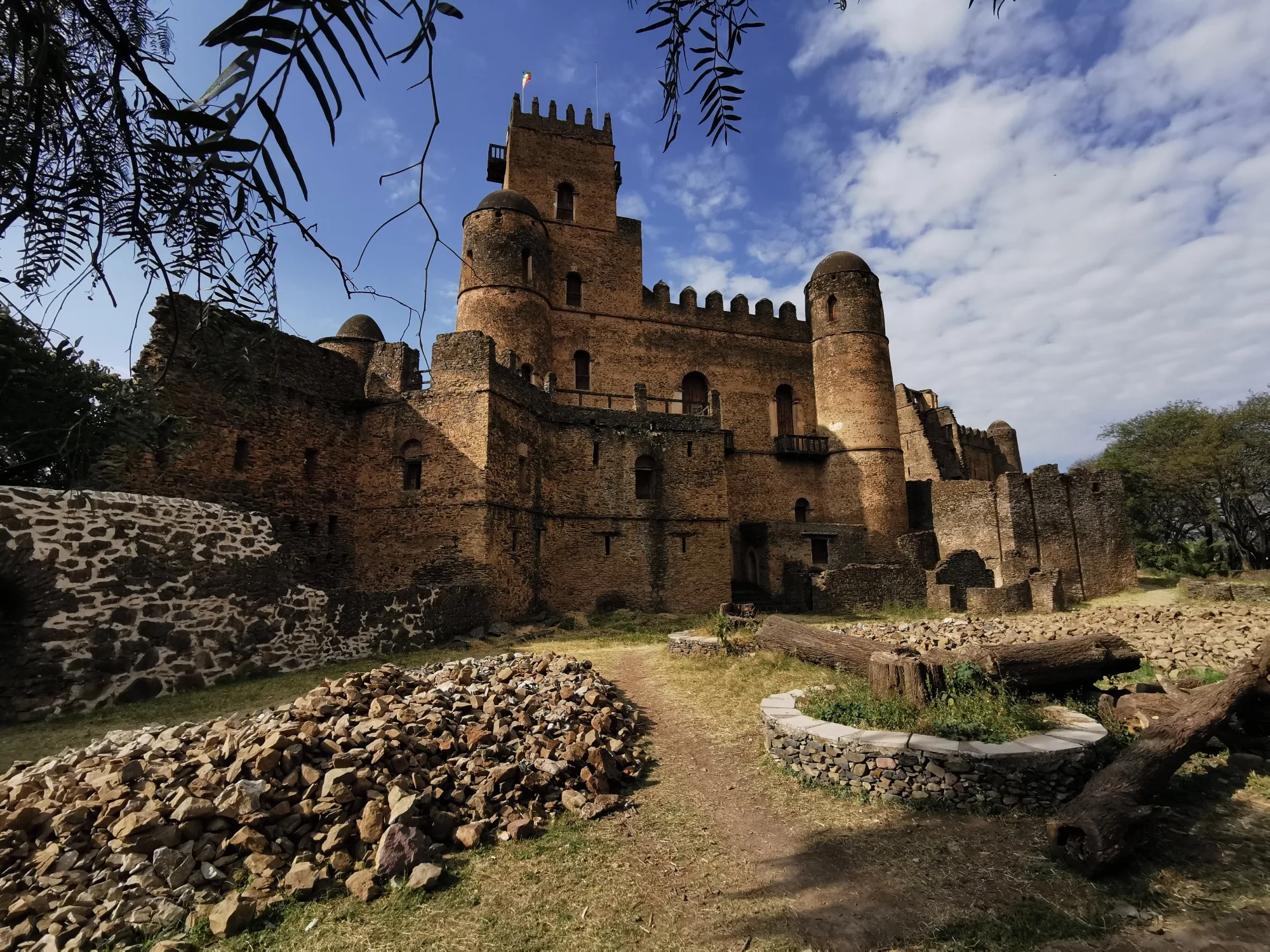
Gondar & Royal Enclosure
Discover the stone castles and imperial battlements of Gondar's Fasil Ghebbi, a seventeenth-century UNESCO World Heritage compound in northern Ethiopia where Solomonic emperors blended Aksumite, Portuguese, and Indian architectural traditions.
About Gondar & Royal Enclosure
Historical Context and Imperial Foundation
Gondar was established in 1636 by Emperor Fasilides (reigned 1632–1667) as the permanent capital of the Ethiopian Empire, ending centuries of nomadic royal tent cities. For over two centuries, Gondar served as the political, administrative, commercial, and theological heart of Ethiopia. Inscribed as a UNESCO World Heritage site in 1979, the Fasil Ghebbi (Royal Enclosure) preserves stone fortresses, palaces, state banqueting halls, and libraries enclosed within a 900-metre stone rampart.
The architecture of Gondar is historically unique, displaying a synthesis of indigenous Aksumite building techniques with Portuguese Renaissance, Moorish, and Indian influences brought by foreign craftsmen and Jesuit missions during the sixteenth and seventeenth centuries.
The founding of Gondar brought lasting administrative stability after decades of regional religious conflict. Trade caravans converged on the city from the Red Sea, the Nile basin, and the southern river valleys, making the city a thriving cosmopolitan center where merchants, scholars, and clergy intermingled.
Architecture of the Royal Enclosure
Within the fortified 70,000-square-metre royal compound stand numerous palaces and state buildings constructed from dark local basalt joined with lime mortar:
- Castle of Emperor Fasilides: The earliest and most impressive structure, standing two storeys high with four rounded corner watchtowers, crenelated battlements, and arched cedar-beamed balconies overlooking the royal grounds.
- Palace of Iyasu I: Built by Fasilides' grandson Iyasu the Great, once lavishly ornamented with gilded ceilings, Venetian mirrors, and ivory inlays described by historical European travelers.
- Banqueting Hall and Library of Emperor Yohannes I: Demonstrating functional civic architecture designed for imperial assemblies and archival storage.
- Castle of Empress Mentewab: Constructed by the influential eighteenth-century regent Empress Mentewab, featuring delicate stone carvings and fine two-storey arched chambers.
The compound also houses the imperial chancery, royal stables, and lion cages where Abyssinian lions were kept as living symbols of the Solomonic dynasty. The surrounding stone curtain wall incorporates twelve ceremonial gates, each historically allocated to specific courtiers, dignitaries, and religious processions.
Fasilides’ Bath and Sacred Cultural Heritage
Located approximately two kilometres northwest of the Royal Enclosure sits Fasilides' Bath, a peaceful rectangular pool enclosing a two-storey stone pavilion shaded by ancient banyan-like sycamore fig trees whose roots twist through stone boundary walls. While historically functioning as a royal retreat and defensive compound, the bath serves today as the central focal point of Gondar's celebrated Timkat (Epiphany) celebrations.
Every year on January 19 (January 20 in leap years), the pool is filled with water diverted from a nearby river. Following night-long prayer services by clergy, the water is blessed and thousands of pilgrims plunge into the pool in symbolic renewal of their baptism. Nearby, the seventeenth-century church of Debre Berhan Selassie preserves Ethiopia's most celebrated church ceiling, decorated with eighty painted angel faces gazing down upon worshippers.
Visiting Logistics, Seasons and Local Context
Gondar is accessible via daily domestic flights from Addis Ababa to Atse Tewodros Airport (GDQ), or by paved road from Bahir Dar (approximately three hours driving along the eastern shore of Lake Tana). The city serves as the standard gateway for trekking expeditions into the nearby Simien Mountains.
The dry months from October to May provide comfortable sightseeing weather, with warm days (24°C to 28°C) and temperate evenings. The rainy season from June to September brings lush greenery across surrounding hills but occasional afternoon travel interruptions. Certified local heritage guides are available at the Royal Enclosure entrance.
Conservation and Practical Guidelines
The Royal Enclosure is managed under the Authority for Research and Conservation of Cultural Heritage (ARCCH). Visitors are requested to stay on designated stone pathways and refrain from climbing historic stone ramparts or touching fragile wall plaster. Photography within Debre Berhan Selassie church requires shoes to be removed at the portal; flash photography inside the church is restricted to preserve seventeenth-century mineral pigments.
Frequently Asked Questions
How much time is needed to tour the main sights of Gondar?
A full day is recommended: half a day to explore the Fasil Ghebbi palaces and museum, followed by afternoon visits to Fasilides' Bath, the Debre Berhan Selassie church, and the Kuskuam royal compound.
Can Gondar be combined with trips to the Simien Mountains?
Yes. Gondar is the primary logistical base for Simien Mountains National Park, located about 100 kilometres south of the park headquarters in Debark.
What is the cultural significance of the angel ceiling at Debre Berhan Selassie?
The ceiling represents the omnipresence of God, with eighty unique winged angel faces painted on indigenous wooden panels, watching in all directions over the congregation.
🦍 Wildlife & Nature
🎯 Top Experiences
🧳 Travel Tips & Practical Advice
Ethiopia: From Ancient Highlands to the Omo Valley
Discover Ethiopia through a carefully paced, modular journey linking Addis Ababa, the Historic North, Harar, Bale Mountains, Sof Omar, the Rift Valley, Chebera Churchura, South Omo and Borana. This guide explains what makes each region distinct—and why current access must always shape the final itinerary.
🗺️ Gondar & Royal Enclosure Experiences
No tours are currently listed. Request a custom journey with a verified local operator.
✨ Request a Custom Journey with a Local Operator →📍 Nearby Destinations in Ethiopia
ℹ️ Practical Info
Explore Gondar & Royal Enclosure
Custom journeys crafted directly by verified in-country specialists.
Request Custom Journey →