Bale Mountains National Park
Journey into Bale Mountains National Park in southeastern Ethiopia. Inscribed as a UNESCO World Heritage site, this afro-alpine wonderland protects the Sanetti Plateau, the misty Harenna Forest, and rare endemic species including the Ethiopian wolf and mountain nyala.
About Bale Mountains National Park
Ecological Importance and Afro-Alpine Habitats
Bale Mountains National Park encompasses more than 2,150 square kilometres in the Oromia Region of southeastern Ethiopia, approximately 400 kilometres south-east of Addis Ababa. Inscribed on the UNESCO World Heritage List in 2023, the park preserves the largest continuous expanse of afro-alpine habitat above 3,000 metres in Africa. The landscape was sculpted by volcanic eruptions during the Oligocene epoch followed by extensive ice age glaciation that carved deep valleys, cirques, and glacial lakes.
The park is celebrated for extraordinary biodiversity and high levels of endemism across distinct ecological zones: northern Afromontane woodlands (3,000–3,500m), the expansive Sanetti Plateau (above 4,000m), and the southern Harenna Forest—one of the largest remaining tropical cloud forests in Ethiopia.
The park acts as a vital hydrological catchment area for southeastern Ethiopia and Somalia. Over forty rivers and streams originate in the Bale massifs, providing perennial water supplies to millions of downstream pastoralists, agriculturalists, and wildlife reserves in the arid lowlands.
Flagship Endemic Wildlife
Bale Mountains National Park is recognized as a global center of mammalian and floral endemism. While wildlife moves freely across wilderness terrain and sightings cannot be promised, the park protects vital habitats for several remarkable species:
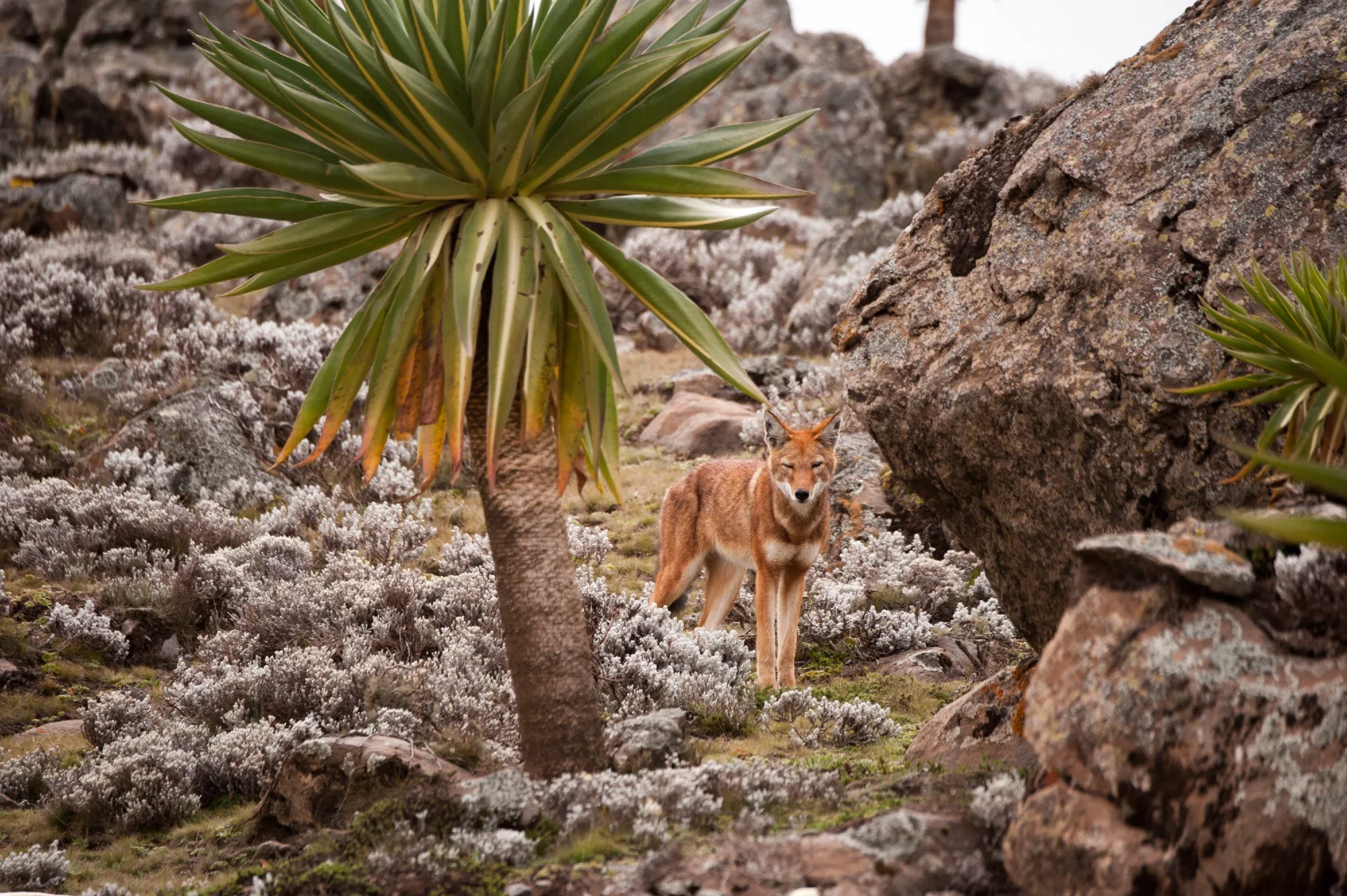
- Ethiopian Wolf (Canis simensis): Africa's most endangered carnivore and the rarest canid in the world. More than half of the surviving global population inhabits the windswept Sanetti Plateau, where they hunt diurnal giant root-rats and grass rats amidst giant lobelias.
- Mountain Nyala (Tragelaphus buxtoni): A magnificent spiral-horned antelope endemic to the Ethiopian highlands, commonly observed foraging around park headquarters at Dinsho in juniper and Hagenia woodlands.
- Bale Monkey (Chlorocebus djamdjamensis): An elusive, bamboo-specialist primate that inhabits highland bamboo groves in the upper Harenna Forest.
- Menelik’s Bushbuck: A dark-coated endemic subspecies living in northern woodlands alongside warthogs, reedbucks, and spotted hyenas.
The Sanetti Plateau and Harenna Cloud Forest
Crossing the Sanetti Plateau involves driving along Africa's highest all-weather motorable road, reaching altitudes exceeding 4,100 metres near the summit of Tullu Dimtu (4,377m). The plateau is characterized by glacial lakes, windswept lichen-covered boulder fields, and towering giant lobelias (Lobelia rhynchopetalum) that can reach six metres in height.
Descending south off the plateau, the road plunges down the steep Harenna Escarpment into the Harenna Forest. Shrouded in canopy mists, this moist cloud forest features moss-draped Podocarpus and fig trees, wild highland Arabica coffee shrubs, and abundant birdlife, with wilderness hiking trails around Rira village and forest waterfalls.
Hiking, Horse Trekking and Birding
Bale offers exceptional wilderness trekking and horse-trekking routes managed in partnership with local community tourism associations. Routes connect Dinsho, Sodota, Wasama, and Rafu, traversing volcanic rock pillars and alpine valleys. With over 310 recorded bird species—including sixteen regional endemics such as the blue-winged goose, spot-breasted lapwing, and Rouget's rail—Bale is a premier African birdwatching destination.
Climate, Seasons and Mountain Preparation
Weather in Bale is alpine and highly changeable. The dry season runs from November through March, offering the clearest skies and favorable conditions for wolf observation on the Sanetti Plateau, though night temperatures on the plateau frequently plunge below freezing (-5°C to -10°C). The wet season occurs from April to October, with peak rainfall between July and September.
High altitude demands warm thermal clothing, windproof and waterproof outer layers, sturdy hiking boots, and sun protection. All trekkers must register at Dinsho park headquarters and arrange authorized park guides and scouts.
Frequently Asked Questions
Can the Ethiopian wolf be seen on a day drive across the Sanetti Plateau?
Yes. The all-weather road between Goba and Delo Menna crosses the Sanetti Plateau, where Ethiopian wolves are frequently observed hunting rodents during morning and late afternoon hours, though sightings remain subject to wildlife movements.
What accommodations are available near Bale Mountains National Park?
Options range from basic park guesthouses and community campsites at Dinsho to comfortable wilderness safari lodges located inside the Harenna Forest and hotels in the nearby gateway town of Robe.
Is horse trekking suitable for beginner riders in Bale?
Local community horses are sure-footed and led by local handlers on foot, making half-day and full-day horse treks accessible to beginners as well as experienced riders.
🦍 Wildlife & Nature
🎯 Top Experiences
🧳 Travel Tips & Practical Advice
Ethiopia: From Ancient Highlands to the Omo Valley
Discover Ethiopia through a carefully paced, modular journey linking Addis Ababa, the Historic North, Harar, Bale Mountains, Sof Omar, the Rift Valley, Chebera Churchura, South Omo and Borana. This guide explains what makes each region distinct—and why current access must always shape the final itinerary.
🗺️ Bale Mountains National Park Experiences
No tours are currently listed. Request a custom journey with a verified local operator.
✨ Request a Custom Journey with a Local Operator →📍 Nearby Destinations in Ethiopia
ℹ️ Practical Info
Explore Bale Mountains National Park
Custom journeys crafted directly by verified in-country specialists.
Request Custom Journey →