Makgadikgadi Pans National Park
Experience the vast salt pans and arid horizons of Makgadikgadi Pans National Park in central Botswana. Witness seasonal zebra migrations along the Boteti River, habituated meerkat colonies, and star-filled desert skies.
About Makgadikgadi Pans National Park
Geological Origin and Desert Topography
Encompassing 4,900 square kilometres in north-central Botswana, Makgadikgadi Pans National Park preserves one of the largest salt pan complexes on Earth. Thousands of years ago, this semi-arid expanse was covered by the super-lake Lake Makgadikgadi, which once stretched across more than 60,000 square kilometres of the central Kalahari basin before tectonic shifts and climatic changes caused its feeder rivers to divert and the lake to evaporate completely.
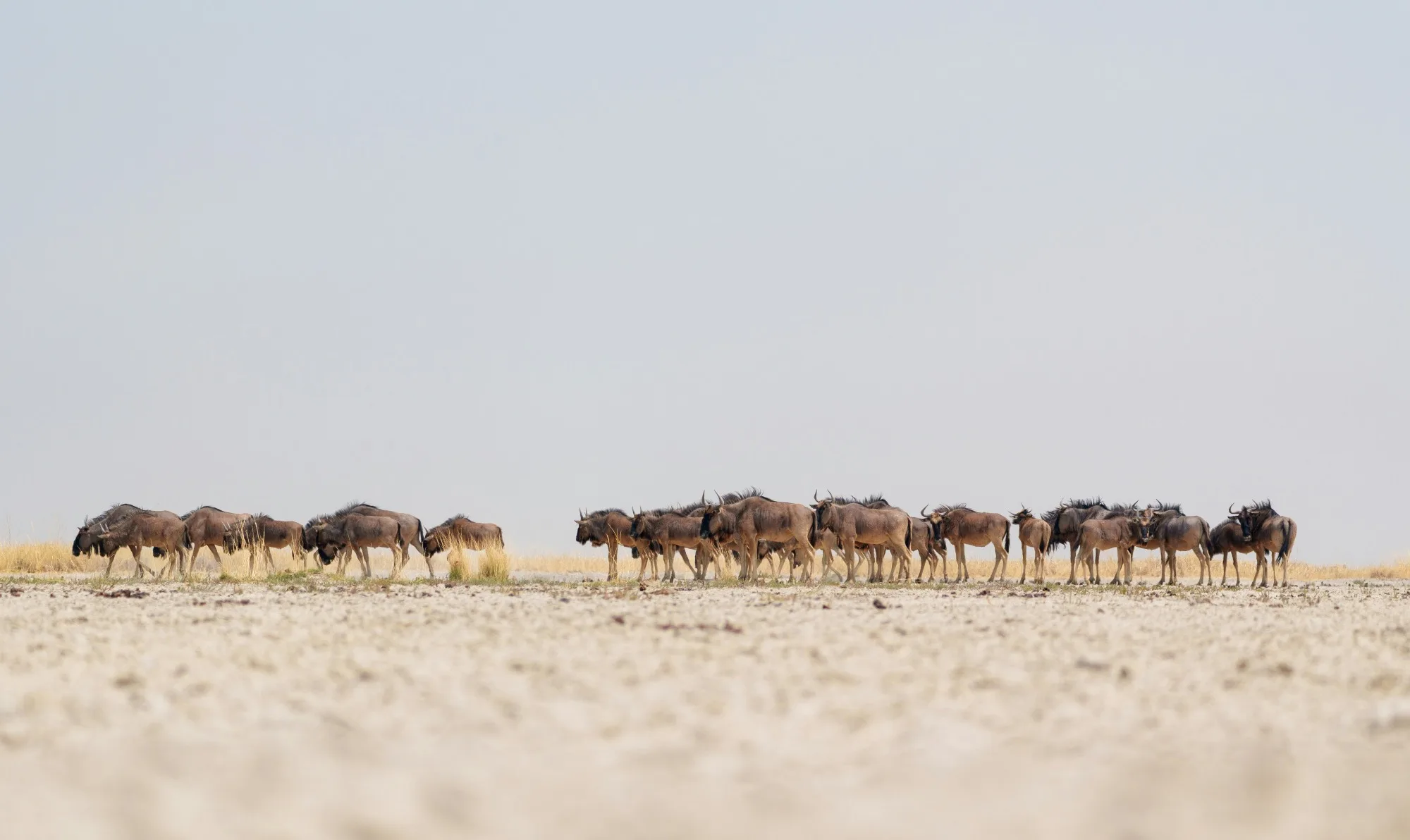
Today, the landscape comprises stark white salt crusts, undulating golden grasslands, isolated granite outcrops, and ancient baobab trees that stand like sentinels across flat, infinite horizons that reflect changing desert light throughout the day.
The Boteti River and the Great Zebra Migration
The western boundary of the national park is formed by the Boteti River, which receives seasonal spillover from the Okavango Delta via the Thamalakane River. When flowing, the Boteti serves as an indispensable lifeline for thousands of migratory plains zebras and blue wildebeest that trek hundreds of kilometres from the pans and northern woodlands during the dry season (May to October).
Visitors positioned along the riverbank can observe thousands of zebras drinking warily at the water's edge, shadowed by resident lion prides, spotted hyenas, and leopards that utilize riparian thickets for ambushes.
Meerkats, Quad Biking and Star-Filled Nights
In adjacent private concessions around the Ntwetwe and Sowa Pans, specialized desert activities provide unforgettable perspectives on Kalahari adaptations:
- Habituated Meerkat Encounters: Accompanied by experienced field researchers, travelers can walk alongside wild meerkat (Suricata suricatta) mobs as they forage for scorpions and beetles in morning sunshine, occasionally using quiet human visitors as lookout perches.
- Quad Biking Expeditions: During the dry season when salt crusts are baked hard, low-impact quad bike expeditions venture into the heart of the pans, where zero visual landmarks and absolute silence create an extraordinary sense of isolation.
- Ancestral Baobabs: Historic baobabs, such as Chapman’s Baobab and Green’s Baobab, have served as navigational beacons for travelers, hunters, and early explorers crossing the Kalahari for centuries.
Seasonal Dynamics: Dry vs. Wet Seasons
Makgadikgadi displays two profoundly contrasting personalities depending on the time of year:
- The Dry Season (May to October): The pans are dry, shimmering white, and accessible by quad bikes and 4x4s. Wildlife gathers heavily along the permanent pools of the Boteti River. Days are clear and warm, while winter nights can drop to near freezing.
- The Wet Season (November to April): Summer rains fill shallow depressions in the pans with mineral-rich water, transforming the desert into fertile algae beds that attract hundreds of thousands of greater and lesser flamingos, alongside migrating waterbirds, making it a critical regional breeding ground.
Logistics, Health and Visiting Advice
Makgadikgadi is accessible by road from Maun (approximately two to three hours driving east on paved highways) or via light aircraft to private concession airstrips. Self-drive exploration across the salt pans during or shortly after rain is hazardous; vehicles can easily break through topsoil into deep subterranean mud. Traveling with experienced safari guides is essential.
Frequently Asked Questions
When is the optimal period to see flamingos in the Makgadikgadi Pans?
Flamingos congregate in shallow flooded pans, particularly Sowa Pan, between December and March during the summer rainy season when algae blooms provide rich food reserves.
Can quad biking on the salt pans be done year-round?
No. Quad biking is restricted to the dry winter months (typically May through October) when the salt surface is completely dry and hard-baked.
Are meerkat encounters assured on a Makgadikgadi safari?
Meerkat colonies in private concessions are habituated to non-intrusive human presence, making sightings highly consistent on morning excursions, though meerkats remain wild animals that stay underground during heavy rain or extreme cold.
🦍 Wildlife & Nature
🎯 Top Experiences
🧳 Travel Tips & Practical Advice
Botswana Beyond the Delta: Chobe, Makgadikgadi and the Okavango
Botswana’s Okavango Delta is extraordinary, but the country’s safari story also includes the Chobe River, salt pans, Kalahari horizons and locally guided journeys.
🗺️ Makgadikgadi Pans National Park Experiences
No tours are currently listed. Request a custom journey with a verified local operator.
✨ Request a Custom Journey with a Local Operator →📷 Makgadikgadi Pans National Park Photo Gallery
Click any photo to enlarge (3)📍 Nearby Destinations in Botswana
ℹ️ Practical Info
Explore Makgadikgadi Pans National Park
Custom journeys crafted directly by verified in-country specialists.
Request Custom Journey →