Chobe National Park
Witness Africa's largest continuous elephant population along the Chobe River in northern Botswana. Renowned for sunset boat safaris, the dynamic Savuti marsh, and rich riverfront biodiversity where four nations converge.
About Chobe National Park
Geographic Setting and Ecological Diversity
Covering approximately 11,700 square kilometres in northern Botswana, Chobe National Park was established in 1968 as the nation’s first national park. Positioned close to the border convergence of Botswana, Namibia, Zambia, and Zimbabwe, Chobe encompasses four distinct ecological regions: the permanent Chobe Riverfront in the north, the dry woodland interior around Ngwezumba, the expansive Savuti marshland in the south-west, and the Linyanti swamp system in the north-west.
The park's lifeblood is the Chobe River, which rises in Angola as the Cuando River, crosses the Caprivi Strip, and flows east before joining the Zambezi River. The riverfront sustains a remarkable mosaic of riparian riverine forests, mahogany and teak woodlands, floodplains, and sand ridges.
Riverboat Safaris and Riverfront Wildlife
The defining safari experience of northern Chobe is water-based wildlife observation along the Chobe Riverfront. Specially designed river safari boats allow travelers to approach riverbanks and shallow sandbars safely without disturbing feeding herds. During the dry season (May through October), thousands of Kalahari elephants migrate to the riverfront to drink, bathe, and swim across to Sedudu Island.
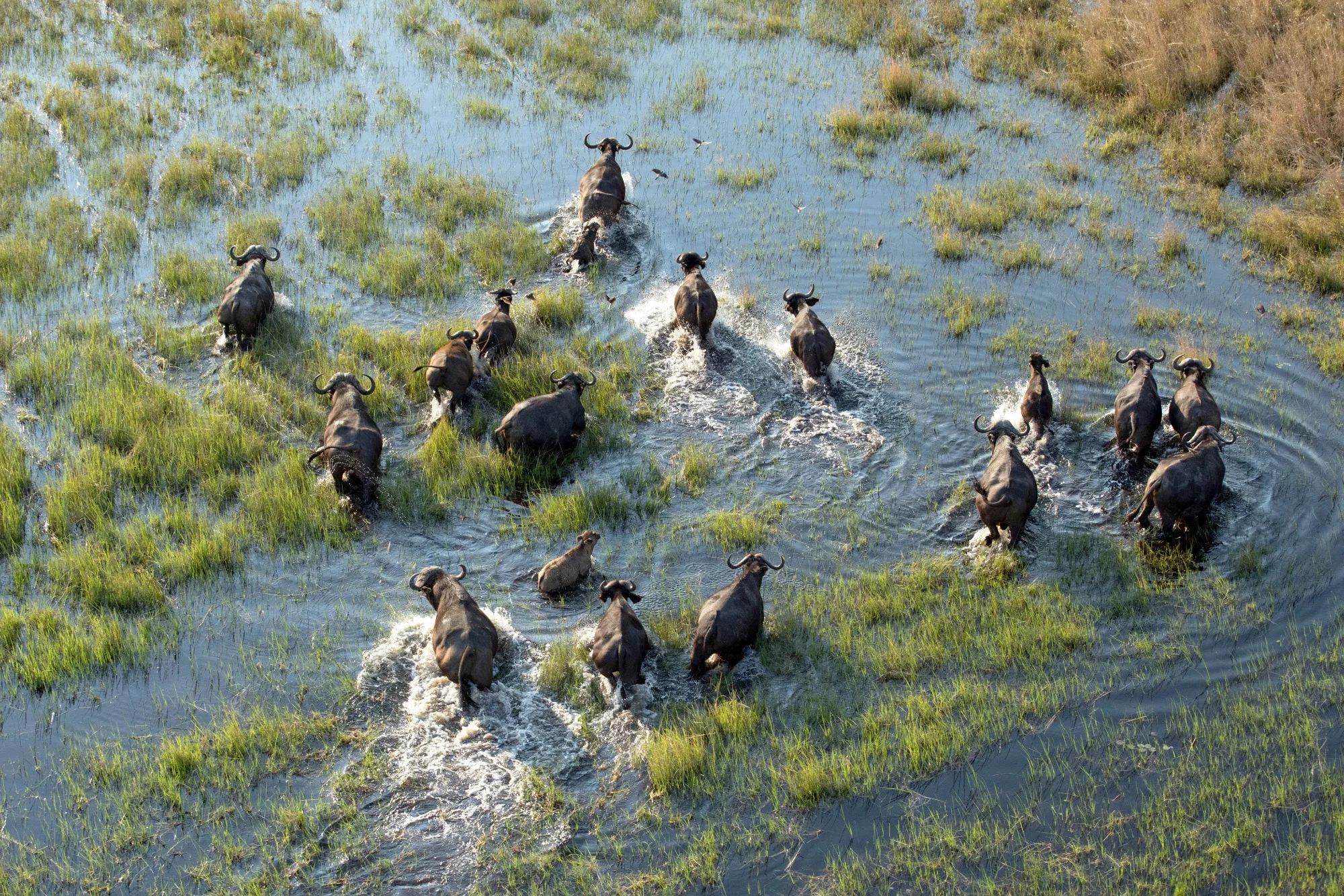
River safaris provide intimate views of large pods of hippopotamuses basking on sandbanks, Nile crocodiles warming themselves in the sun, and Cape buffalo herds grazing on sweet floodplain grasses. African fish eagles call from high branches over the river, and water monitors patrol the water's edge.
The Legend and Dynamics of the Savuti Marsh
In the southern sector of Chobe lies the legendary Savuti region, renowned for its unpredictable hydrological history. The enigmatic Savuti Channel connects the Linyanti river system to the Savuti marsh; for decades at a time, the channel mysteriously dries up and ceases to flow, only to flow again independently of local rains.
When dry, Savuti transforms into a dramatic open grassland savanna flanked by rocky volcanic outcrops (inselbergs) featuring ancient rock art created by ancestral San hunter-gatherers. Savuti is celebrated in natural history research for its powerful resident lion prides, spotted hyena clans, cheetahs, and seasonal zebra migrations that pass through during the transition between dry and wet seasons.
Planning, Seasons and Regional Connections
Wildlife viewing along the Chobe Riverfront is most concentrated during the dry winter months from May to October, when water in the interior vanishes and animals converge on the river. Days are sunny and warm (25°C to 30°C), while nights are cool. The green season from November to April brings lush grass, dramatic thunderheads, migrant bird flocks, and the arrival of plains zebras in Savuti.
The northern gateway town of Kasane has an international airport (BBK) and offers seamless road and boat transfers to Victoria Falls in Zimbabwe and Livingstone in Zambia (approximately 70–80 kilometres away), making Chobe an ideal anchor for multi-country regional itineraries.
Conservation Guidelines and Safety
Visitors must remain inside vehicles and boats at all times except at designated picnic sites and park gates. Elephant herds along the Chobe Riverfront frequently cross access roads; drivers and guides must maintain safe distances and yield right of way. Bilharzia and Nile crocodiles are present in the Chobe River; swimming is strictly forbidden.
Frequently Asked Questions
How do riverboat safaris differ from standard vehicle game drives in Chobe?
Boat safaris provide unobstructed, water-level angles for photography and allow travelers to watch elephants swimming and drinking without vehicle engine noise or dust, while vehicle drives explore inland woodland tracks and predator territories.
Can Chobe National Park be visited as a day trip from Victoria Falls?
Yes. Kasane is located about an hour's drive from Victoria Falls, making day trips with morning river cruises and afternoon game drives popular, though staying two or three nights allows exploration of quieter river sectors and Savuti.
Are elephant sightings assured along the Chobe River?
During the dry season from June to October, elephants gather along the riverfront in very large numbers daily. Sightings during the rainy summer season are more dispersed as herds move into inland mopane woodlands.
🦍 Wildlife & Nature
🎯 Top Experiences
🧳 Travel Tips & Practical Advice
Botswana Beyond the Delta: Chobe, Makgadikgadi and the Okavango
Botswana’s Okavango Delta is extraordinary, but the country’s safari story also includes the Chobe River, salt pans, Kalahari horizons and locally guided journeys.
🗺️ Chobe National Park Experiences
No tours are currently listed. Request a custom journey with a verified local operator.
✨ Request a Custom Journey with a Local Operator →📷 Chobe National Park Photo Gallery
Click any photo to enlarge (3)📍 Nearby Destinations in Botswana
ℹ️ Practical Info
Explore Chobe National Park
Custom journeys crafted directly by verified in-country specialists.
Request Custom Journey →