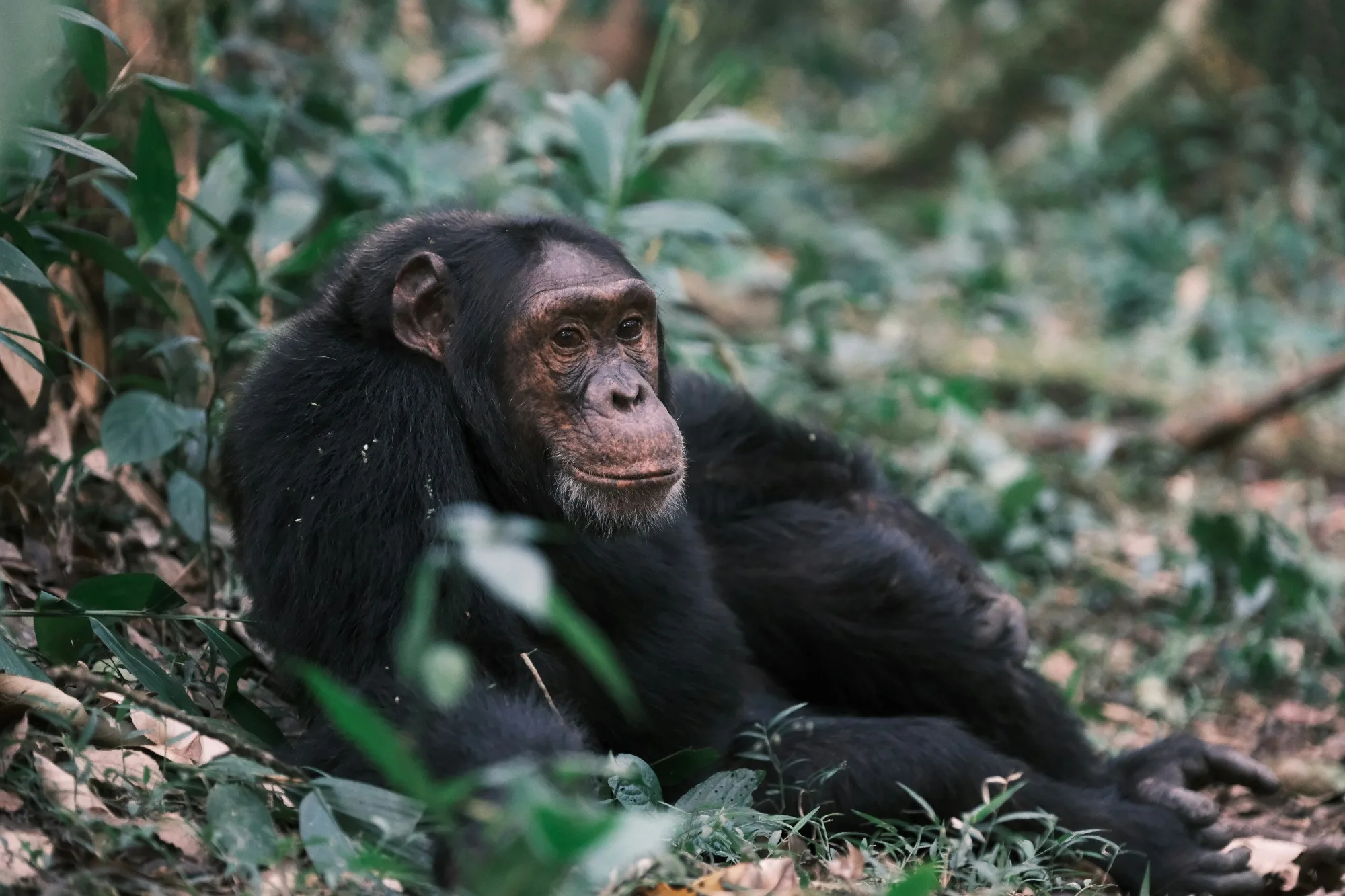
Kibale Forest National Park
Explore the lush mid-altitude rainforest of Kibale Forest National Park in western Uganda. Renowned for thirteen primate species and a thriving population of eastern chimpanzees, Kibale provides exceptional primate tracking and community wetland walks.
About Kibale Forest National Park
Ecology and Primate Diversity in the Albertine Rift
Covering 795 square kilometres in western Uganda’s Kabarole and Kamwenge districts, Kibale Forest National Park protects a transition zone between lowland evergreen rainforest and afro-montane forest. Established as a national park in 1993, Kibale is widely recognized as one of the most significant primate conservation reserves in Africa, sustaining thirteen distinct primate species across its dense woodland canopy.
The park forms a contiguous wildlife migration corridor with Queen Elizabeth National Park to the south, allowing seasonal movements of forest elephants, giant forest hogs, and antelopes. Elevations range from 1,100 metres in the south to 1,590 metres in the north, creating a moist, warm environment characterized by towering ironwood, mahogany, and fig trees.
Chimpanzee Tracking and the Kanyanchu Research Circuit
Kibale is home to an estimated 1,500 eastern chimpanzees (Pan troglodytes schweinfurthii). Guided tracking expeditions depart twice daily from the Kanyanchu Visitor Center, where habituated communities have been monitored continuously by researchers since the early 1990s.
During tracking excursions, visitors follow experienced Uganda Wildlife Authority rangers through the forest undergrowth, guided by vocal choruses of pant-hoots and drumming on buttress roots. Once a troop is contacted, guests spend up to sixty minutes observing chimpanzees foraging in high fig canopies, grooming on the forest floor, and interacting in complex social hierarchies.
The Chimpanzee Habituation Experience (CHEX)
For travelers seeking a deeper understanding of primate behavior, UWA offers the full-day Chimpanzee Habituation Experience. Participants accompany researchers and rangers before dawn as chimpanzees awaken from their overnight leaf nests, remaining with the semi-habituated troop throughout the day until they construct new nests at dusk. Group sizes are strictly restricted to four visitors.
Thirteen Primate Species and Nocturnal Forest Walks
Alongside chimpanzees, Kibale supports impressive densities of other primates, including the endangered Central African red colobus, Ugandan red-tailed monkey, grey-cheeked mangabey, olive baboon, blue monkey, and black-and-white colobus. Guided night walks with spotlights reveal nocturnal creatures including eastern needle-clawed galagos, Demidoff's dwarf bushbabies, and potto primates foraging in the sub-canopy.
Bigodi Wetland Sanctuary and Community Conservation
Adjacent to the southeastern boundary of the park lies the Bigodi Wetland Sanctuary in the Magombe Swamp. Managed by the Kibale Association for Rural and Environmental Development (KAFRED), this community-run eco-tourism initiative features elevated boardwalks winding through papyrus reedbeds and forest fringes.
Bigodi is celebrated for harboring over 200 bird species—including the great blue turaco, papyrus gonolek, and white-spotted flufftail—as well as eight primate species. Revenues directly fund local schools, clean water wells, and agricultural conservation workshops, demonstrating the tangible benefits of community-partnered ecotourism.
Seasons, Access and Travel Logistics
Kibale can be visited throughout the year. The drier seasons from December to February and June to August provide easier walking along forest tracks and clearer morning light. The wet seasons from March to May and September to November produce abundant forest fruit, often bringing chimpanzees to feed in lower tree branches.
Kibale is located roughly 26 kilometres southeast of the tourism hub of Fort Portal and approximately five to six hours by paved road from Kampala. Scheduled domestic flights connect Entebbe International Airport to Kasese Airstrip, followed by an eighty-minute road transfer.
Frequently Asked Questions
What is the minimum age for chimpanzee tracking in Kibale?
The Uganda Wildlife Authority sets the minimum age for standard chimpanzee tracking and habituation experiences at twelve years to ensure visitor discipline and safety in dense forest conditions.
How does Kibale chimpanzee tracking differ from Bwindi gorilla trekking?
Chimpanzee tracking in Kibale generally involves flatter terrain than Bwindi, but chimpanzees move much faster through the trees and across the forest floor than mountain gorillas, requiring active walking to follow troops.
Are medical face masks required during chimpanzee encounters?
Yes. UWA requires all visitors to wear medical face masks while observing chimpanzees to protect wild primates from human respiratory pathogens.
🦍 Wildlife & Nature
🎯 Top Experiences
🧳 Travel Tips & Practical Advice
Uganda Beyond Gorilla Trekking: Forests, Waterways and Wildlife
Uganda’s mountain gorillas are extraordinary, but they are only one part of a country shaped by rainforest, savanna, crater lakes and the Nile. Discover a balanced journey through its most distinctive landscapes.
🗺️ Kibale Forest National Park Experiences
No tours are currently listed. Request a custom journey with a verified local operator.
✨ Request a Custom Journey with a Local Operator →📷 Kibale Forest National Park Photo Gallery
Click any photo to enlarge (3)📍 Nearby Destinations in Uganda
ℹ️ Practical Info
Explore Kibale Forest National Park
Custom journeys crafted directly by verified in-country specialists.
Request Custom Journey →