There are landscapes that impress from a distance, and others that make their presence felt underfoot. Erta Ale belongs to the second kind.
In Ethiopia’s Afar Region, the earth opens into a vast terrain of dark lava, salt flats and sun-bleached horizons. At its heart rises Erta Ale, a broad shield volcano whose name is often translated from Afar as “smoking mountain.” The journey is not a conventional sightseeing trip. It is an encounter with a living geological landscape—and with a region whose history and identity are inseparable from the Afar people who call it home.
Erta Ale should never be treated as a casual attraction or a guaranteed spectacle. Volcanic conditions change. Regional access can change even faster. But when authorities permit travel and a properly licensed local team determines that the route is viable, the experience can offer an unusually direct view of the forces that continue to shape the African continent.
Where is Erta Ale?
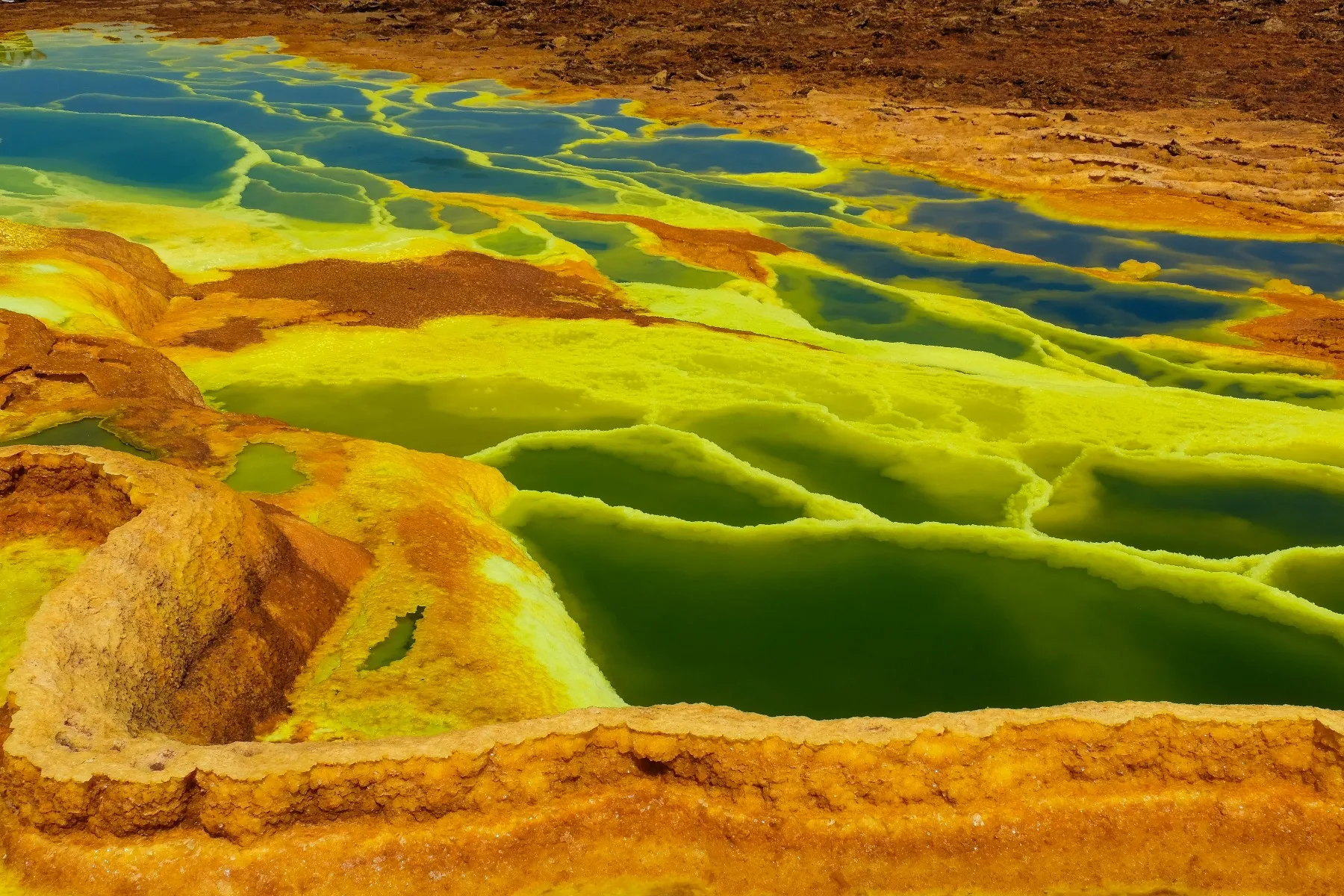
Erta Ale lies in the Danakil Depression of northeastern Ethiopia, within the Afar Region. The wider depression forms part of the East African Rift system, where tectonic plates are gradually pulling apart. It is an environment of extremes: some areas sit below sea level, daytime temperatures can be severe, and water and shade are limited.
The volcano itself is a low, wide basaltic shield rather than a steep, symmetrical cone. According to the Smithsonian Institution’s Global Volcanism Program, the volcanic edifice is approximately 50 kilometres wide and rises more than 600 metres from below sea level. Its summit contains an elongated caldera with pit craters that have hosted persistent lava-lake activity over many decades.
That scientific description explains the scale, but not the sensation. From ground level, Erta Ale is a world of black rock, mineral colour and enormous sky. There are few visual cues familiar from greener landscapes. Distance becomes difficult to judge. Silence feels expansive. After dark, any visible glow is magnified against the desert night.
A volcano that is always changing
Erta Ale is one of Ethiopia’s most active volcanoes. Long-lived lava-lake activity has been documented since at least the late 1960s, although observations and historical reports suggest a longer record. The volcano’s surface activity, however, is not constant in appearance or intensity.
Crust can form over molten lava. A lake level may rise or fall. New vents, overflows or collapses may alter the safest viewing area. Smoke, heat haze and wind can obscure the crater. A photograph taken in one month is therefore not a promise of what a traveler will see later.
This uncertainty is part of visiting an active geological site. Responsible operators do not guarantee dramatic lava views. They evaluate current volcanic information, local authority guidance, weather, security and the condition of the route before deciding whether a journey should proceed.
The journey matters as much as the crater
Reaching Erta Ale has traditionally involved long overland travel through the Afar landscape followed, depending on road conditions and the chosen camp, by a walk over uneven volcanic ground. It demands more patience and preparation than an ordinary excursion.
The route reveals the scale of the Danakil environment: dry plains, old lava fields, isolated settlements and distant escarpments. Light changes the land throughout the day, turning rock from charcoal to rust and the horizon from white to gold. At night, away from cities, the sky can feel almost architectural in its depth.
The journey also passes through the homeland of Afar communities. They are not scenery within an adventure narrative; they are the people with the deepest relationship to this land. Local knowledge is fundamental to route decisions, water planning, camp logistics and safe movement across the desert.
Travelers should choose arrangements that employ and respect local guides, drivers, cooks and community partners. Photography of people should always be based on clear permission. Cultural curiosity should be accompanied by courtesy, fair payment and a willingness to listen.
What a responsibly planned expedition may involve
Exact itineraries vary, but a professionally organized Erta Ale journey may include:
- A pre-departure briefing covering security, heat, hydration and volcanic hazards
- A suitable four-wheel-drive vehicle with an experienced desert driver
- Local Afar guides and any escorts required by current regulations
- Drinking water, meals and basic overnight camp arrangements
- A hike or walk on rough lava terrain, sometimes after sunset or before sunrise
- A conservative viewing position selected according to current conditions
- Contingency time for road, weather or authority-related changes
Facilities are generally basic. Travelers should expect dust, heat, limited washing facilities and simple sleeping arrangements rather than hotel comfort. A reputable operator should explain the standard honestly before accepting a booking.
Current access and safety come first
Important planning note: Access to Ethiopia’s Afar Region can be restricted at short notice because of security, transport or administrative conditions. Official travel advice may prohibit or discourage travel to parts of the region, and airport access for foreign nationals may also be restricted. Do not travel independently or rely on an old itinerary found online.
Before making any payment or beginning a journey:
- Check the latest travel advice issued by your own government.
- Confirm the current position with Ethiopian authorities and a properly registered local operator.
- Ask whether the proposed route, airport and overnight locations are currently permitted.
- Obtain travel insurance that explicitly covers the destination, planned activities and medical evacuation.
- Understand the operator’s cancellation and route-change policy.
If official advice or local authorities say the area should not be visited, postpone the trip. No photograph is worth ignoring a restriction or placing travelers, guides or communities at risk.
Physical preparation
Erta Ale is remote, hot and exposed. The walk may not be technically difficult for every traveler, but loose lava, darkness, heat and fatigue can make it demanding.
Before booking, discuss any heart, respiratory, mobility or heat-related concern with a medical professional. Sulphurous gases and volcanic fumes can affect breathing, while dehydration can develop quickly. Travelers should be comfortable walking on uneven ground and following safety instructions without exception.
A packing list commonly includes:
- Supportive closed walking shoes with reliable grip
- Lightweight, breathable clothing and sun protection
- A warm layer for wind or cooler night hours
- Headlamp with spare batteries
- Personal medication and a compact first-aid kit
- Refillable water bottle or hydration system
- Dust protection, such as a well-fitting mask or buff
- Power bank and protected camera equipment
Your operator’s current list should take priority because conditions and logistics vary.
When to consider traveling
Travel is generally more comfortable during the relatively cooler part of the year, while the hottest months can make the Danakil environment exceptionally demanding. There is no universal “best” date, however. Temperature is only one factor; volcanic activity, road conditions, regional security and government restrictions all matter.
Plan around verified current conditions rather than a fixed promise based on season alone. Flexible travelers are better prepared for delays, itinerary substitutions or cancellation.
Traveling responsibly in the Afar Region
Remote places are especially vulnerable to careless tourism. A small group can create a disproportionate amount of waste, water pressure and disturbance.
Choose an operator that can clearly explain how it:
- Removes all non-organic waste from camps and viewpoints
- Manages sanitation away from water sources and settlements
- Employs local people and purchases supplies fairly
- Limits group size and vehicle impact
- Maintains a safe distance from crater edges and unstable ground
- Avoids exaggerated claims or unsafe access for photographs
- Secures informed permission before photographing residents
Responsible travel is not an optional label. In a landscape as fragile and demanding as Erta Ale, it is the basis on which a journey should be organized.
Combining Erta Ale with a wider Ethiopia journey
When regional conditions permit, Erta Ale can form one chapter of a broader Ethiopia itinerary. The country offers dramatically different experiences: Addis Ababa’s museums and contemporary culture, the rock-hewn churches of Lalibela, the castles of Gondar, the highlands of the Simien Mountains and the ancient heritage of Aksum.
Do not assume these places can always be connected in a single uninterrupted route. Ethiopia is vast, and regional travel conditions can differ. Build the itinerary with current advice, realistic transfer times and enough flexibility to substitute destinations if access changes.
A thoughtful journey should also include time beyond headline landmarks: meals in locally owned restaurants, conversations with guides, markets, music and the everyday details that reveal Ethiopia as a living country rather than a collection of monuments.
Frequently asked questions
Can I visit Erta Ale independently?
Independent travel is not recommended. The remoteness, navigation, extreme heat, volcanic hazards and changing regional restrictions require an experienced, legally compliant local team.
Is the lava lake always visible?
No. Erta Ale’s activity changes, and smoke, crust, crater geometry or safety restrictions may limit visibility. Avoid any seller that guarantees a particular lava display.
How difficult is the walk?
The distance and route depend on vehicle access and camp location. Even a moderate walk becomes harder on sharp, uneven lava in heat or darkness. Ask the operator for the current distance, elevation, timing and support arrangements.
Is Erta Ale suitable for children?
The heat, fumes, basic camp conditions and remote emergency access can make the journey unsuitable for young children. Families should seek current professional medical and operator advice before considering it.
What makes the experience special?
Erta Ale brings together active geology, the vast Danakil landscape and Afar knowledge of a demanding environment. Its value lies not only in the possibility of seeing lava, but in understanding a place where land, culture and natural forces remain visibly connected.
Plan with care
Erta Ale rewards humility. The volcano decides what can be seen. The desert sets the pace. Local knowledge determines what is possible, and present-day conditions must always outweigh a traveler’s expectations.
TravelAfricas can help connect travelers with African tour specialists who understand that responsibility begins before the journey. When access conditions permit, request a carefully planned Ethiopia itinerary and ask every practical question before confirming.
Explore Ethiopia thoughtfully. Travel when conditions are right. Leave the landscape respected.
Plan Your Journey with Verified Local Operators
Ethical itineraries · Registered local guides · Direct booking
TravelAfricas Editorial Team
Our editorial team collaborates with licensed local guides, conservationists, and regional travel specialists to produce accurate, responsible African travel dispatches.